
Rabby Extension Download, Cross-Chain Swaps, and the Real Economics of Gas
The cheapest crypto transaction is not always the one with the lowest gas quote. In a cross-chain swap, the largest cost may come from a bridge fee, an unfavorable exchange rate, a failed transaction, or an approval that creates future exposure. That counterintuitive point matters before downloading any wallet extension: a useful interface should help you understand the whole transaction path, not merely display a single fee number.
For US-based DeFi users, this distinction is practical. Moving assets between networks can involve different native tokens, fee markets, liquidity pools, bridge mechanisms, and wallet permissions. Rabby is best understood as a transaction-management interface for this environment, rather than as a magic device that makes every swap cheap or risk-free. The quality of the result still depends on the route selected, the application being used, network conditions, and the judgment of the person signing.
Myth One: A Cross-Chain Swap Is One Transaction
It usually is not. The phrase “cross-chain swap” compresses several different operations into one convenient label. A user may first approve a token contract, then deposit or send assets into a bridge or interoperability protocol, wait for a message to be verified, and finally receive or claim an asset on another network. Some routes also include a decentralized exchange trade before or after the cross-chain transfer.
Each step has its own failure mode. An approval may grant a contract permission to spend tokens. A bridge may depend on validators, external verification, liquidity providers, or a messaging system. A destination swap may face limited liquidity or price impact. The wallet can help present the signing sequence and network context, but it cannot eliminate the underlying smart-contract, bridge, liquidity, or market risks.
This is why the first useful habit is to decompose the route. Ask what asset leaves the source chain, what asset arrives on the destination chain, which contracts receive permission, and whether the destination asset is native, wrapped, or issued by a bridge. “Same ticker” does not necessarily mean “same asset.” A token represented on two networks can have different issuers, redemption assumptions, and liquidity conditions.
Before installing an extension, use the official project channel and verify that the download source and domain are correct. A search result, sponsored advertisement, or message promising an urgent update is not proof of authenticity. Users who want to review the official installation path can consult the rabby wallet extension resource, then check the browser’s extension publisher and permissions before importing or creating a wallet.
What the Wallet Can See—and What It Cannot Know
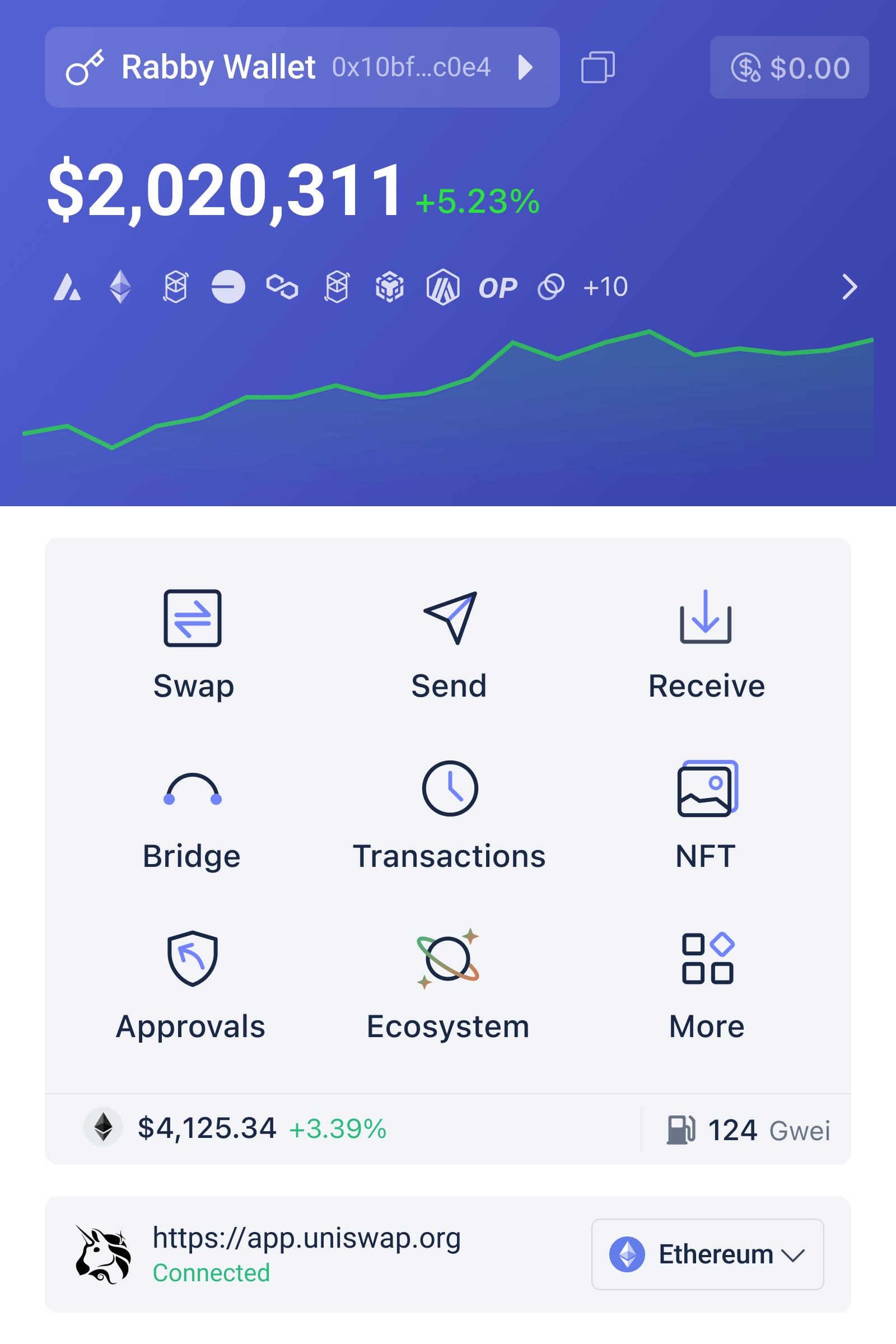
Wallet software can provide valuable transaction context. Depending on the application and network, a preview may show the contract being called, the assets expected to move, token approvals, estimated fees, and possible warnings. This is more informative than blindly clicking “confirm,” especially when a familiar-looking decentralized application sends an unfamiliar transaction.
But a preview is an interpretation, not a guarantee. A contract may behave differently under unusual market conditions. A token may contain transfer restrictions or unusual logic. A simulation may not capture a later price move, a bridge outage, a reorganization, or an exploit that occurs after signing. The important mental model is not “the wallet has certified this transaction.” It is “the wallet has given me evidence to evaluate before I authorize it.”
That distinction also applies to phishing protection. A warning can identify suspicious behavior or a mismatch between expected and observed actions, but no automated system can perfectly classify every contract. Experienced users should treat warnings as prompts for investigation rather than as an invitation to bypass them. New users should be especially cautious when a site asks for a seed phrase, private key, or remote-control access. Legitimate browser extensions do not need those secrets pasted into a website.
Gas Optimization Is a Timing and Design Problem
Gas is the computational resource used to execute operations on networks such as Ethereum and its related ecosystems. The fee paid by a user generally reflects the amount of computation and storage required, multiplied by the network’s current price for block space. A swap touching several contracts can therefore cost more than a simple transfer, even when the dollar value of the trade is small.
The most common gas myth is that users can always save money by manually selecting the lowest possible fee. On fee markets that use a base fee plus a user-selected priority component, lowering the tip may reduce urgency but can also leave a transaction pending. A stuck transaction is not automatically cheaper: while waiting, the market can move, the quoted route can expire, or the user may need to replace the transaction with a higher fee.
For ordinary DeFi activity, a better framework is to separate four decisions:
- Network choice: the same action may have very different fees and liquidity conditions on different networks.
- Route choice: a path with fewer contract calls may cost less, but a longer route can sometimes provide better execution.
- Timing: congestion and demand for block space change throughout the day and around major market events.
- Failure tolerance: a fee setting should reflect how quickly the transaction must settle and how costly delay would be.
There is also a less obvious trade-off between gas and price impact. Suppose a user chooses a route with one additional swap because it offers deeper liquidity. That route may consume more gas but produce a better final amount. Conversely, a route that looks inexpensive at the transaction layer can be economically worse if its pool is thin. The relevant measure is not “gas in isolation,” but the total execution cost: network fee, bridge fee, price impact, slippage, and the value of time.
Approvals, Slippage, and the Cost of Convenience
Token approvals are another place where convenience can obscure risk. An approval allows a designated contract to spend a specified amount of a token on the user’s behalf. Unlimited approvals reduce repeated signing, but they can increase the potential loss if the approved contract is compromised or behaves unexpectedly. Smaller or exact approvals may require more transactions and therefore more gas, yet they narrow the permission being granted.
Slippage is different from gas. It describes the difference between the expected exchange rate and the rate actually received. A low slippage setting can protect the user from accepting a materially worse price, but it may cause a transaction to fail when the market moves. A high setting increases the probability of execution while giving the route more room to settle at an unfavorable price. Neither setting is universally correct; the appropriate tolerance depends on liquidity, volatility, trade size, and urgency.
Cross-chain routes add another boundary condition: the source transaction may succeed while the destination step is delayed or fails. That does not always mean the assets have vanished, but recovery may require a separate claim, a retry, or support from the protocol’s documented process. Users should avoid assuming that “confirmed on the first chain” means “fully completed everywhere.” Save the transaction identifiers and understand the route’s settlement model before committing significant funds.
A Practical Workflow Before You Click Confirm
Start with a small test amount when using a new network, bridge, or decentralized application. Confirm that the destination wallet address is correct and that you possess the native token needed for fees on the destination chain. A wallet holding stablecoins but no destination gas token may be unable to swap, transfer, or claim after the bridge operation completes.
Next, compare the expected output rather than focusing only on the fee line. Check the minimum received amount, route duration, bridge or protocol fee, price impact, and whether an approval is required. If the route changes the asset’s representation, investigate what you are receiving. A wrapped token may be useful and liquid, but its value depends partly on the mechanism that connects it to the underlying asset.
Then inspect the transaction request inside the wallet. The contract address, chain, token amount, and method should match what the application claims you are doing. If the wallet reports an unexpected approval or a request to sign opaque data, pause. The fastest transaction is the one that does not need to be reversed after a preventable mistake.
Finally, record the decision in terms of total cost and purpose. If the transaction is a small experiment, minimizing complexity may matter more than shaving a few cents from gas. If it is a large treasury movement, security assumptions, liquidity, and operational recoverability deserve more weight than speed. This is a form of transaction-cost analysis: optimize for the outcome, not for a single visible number.
What to Watch as DeFi Interfaces Mature
The useful direction for wallet design is not simply more warnings. It is better translation between contract-level actions and human-level consequences. A strong interface would help users compare routes by delivered value, identify permissions that remain active, distinguish native from wrapped assets, and show where a cross-chain process can pause. These improvements would reduce cognitive load without pretending that software can replace due diligence.
Whether that future arrives smoothly depends on several unresolved issues: fragmented liquidity, inconsistent standards across networks, changing bridge security models, and the difficulty of explaining probabilistic risks in a small browser window. If interoperability becomes more standardized, route comparison may become easier. If complexity continues to grow faster than wallet interfaces can explain it, users may gain convenience while losing visibility. The signal to watch is not the number of supported chains alone, but whether users can make better decisions across them.
Frequently Asked Questions
Does installing a wallet extension make cross-chain swaps safe?
No. An extension can improve transaction visibility and help organize signing, but safety still depends on the application, bridge, token contract, route, permissions, and the user’s verification. Use official download sources, protect the recovery phrase offline, and test unfamiliar routes with a small amount.
How can I reduce gas when swapping between networks?
Compare the total delivered value rather than choosing the lowest displayed gas estimate. Consider network congestion, route complexity, liquidity, price impact, bridge fees, and timing. Batch actions only when the application supports it safely, and do not set fees so low that the transaction remains pending during a fast-moving market.
Why do I need gas on more than one network?
Each network generally pays validators or block producers using its own native fee asset. A cross-chain transfer may cover the source transaction without automatically providing the native token required for later actions on the destination chain. Check this requirement before moving funds.
The sharper conclusion is simple: gas optimization is not fee minimization, and a cross-chain swap is not a single event. A capable wallet interface can make the hidden steps more legible, but the user still has to evaluate permissions, settlement, liquidity, and recovery paths. Downloading the extension is only the beginning; the real advantage comes from using its transaction information to ask better questions before signing.