
Not all wallets are equally private: how a mobile XMR/BTC multi‑currency wallet actually protects you
Misconception first: many users assume “private wallet” is a product label rather than a set of composable protections. In practice privacy is an emergent property that depends on protocol features (like Monero ring signatures), network configuration (Tor vs clearnet), device security, and the economic choices you make when spending. This article unpacks how a modern privacy‑focused mobile wallet implements those layers for Monero (XMR), Bitcoin (BTC), and other coins, where the real strengths lie, and where hidden trade‑offs remain for U.S. users who care about confidentiality and regulatory exposure.
I’ll sketch the mechanisms that matter, compare concrete privacy tools across chains, and then give practical heuristics for decisions you actually face: when to route through Tor, when to use hardware signing, how subaddresses change your threat model, and what the wallet cannot guarantee even if it follows best practice.
Core mechanisms: how privacy is built, not labelled
Privacy in a wallet is the sum of technical controls and operational choices. At the protocol level Monero provides privacy by default: stealth addresses, ring signatures, and confidential transactions hide senders, recipients, and amounts. A wallet that supports Monero must combine correct protocol implementation with local key control and private view key handling. Practically, that means background synchronization that fetches blockchain data without leaking keys, and preserving the private view key on‑device so the wallet can scan incoming outputs without exposing secrets to external services.
Bitcoin is different — it is fundamentally transparent. Wallets add privacy through pattern‑reducing techniques: coin control (which lets you choose which UTXOs to spend), PayJoin (a collaborative transaction shape that breaks simple chain‑analysis heuristics), Silent Payments (which decouple address reuse signals), and batching. Those are privacy-enhancing but optional; their effectiveness depends on the user’s choices and the wider network of cooperating wallets and services.
How Cake Wallet combines these for multi‑currency privacy
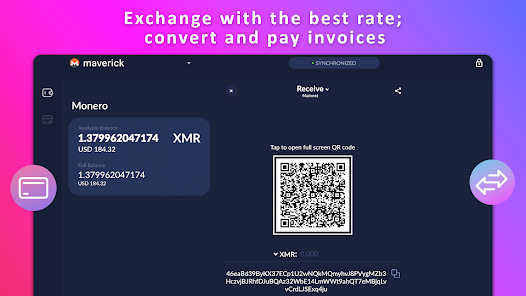
One good example of a wallet that stitches these mechanisms together is designed to support both Monero and Bitcoin alongside many other chains and tokens. For Monero, that design includes background sync, subaddresses for unique transaction routing, and the guarantee that the private view key never leaves the device — a critical boundary condition for plausible privacy when relying on remote nodes. For Bitcoin, the wallet layers in PayJoin v2, UTXO coin control, Silent Payments, and batching to reduce linkability within Bitcoin’s transparent ledger.
Further protections are built at the network and device level. A strict no‑telemetry policy reduces developer-side data leakage: transaction history, IPs, and device identifiers are not logged. Network anonymity options like Tor‑only mode, I2P proxy support, and the ability to connect to your own node give the user control over network metadata. Device encryption leverages platform hardware — Secure Enclave on iOS or TPM on Android — and local authentication (PIN, Face ID, fingerprint) to protect keys on the phone itself.
Those choices interact. For example, using your own full node plus Tor gives strong network and blockchain privacy but costs time, bandwidth, and complexity. Conversely, relying on public remote nodes is convenient but increases metadata leakage unless you pair that with Tor and strict key handling. The practical takeaway is this: privacy is layered and you should plan which layers you will actually operate.
Hardware signing, air‑gapped options, and cross‑chain swaps
Software wallets that integrate external hardware keys reduce the risk of device compromise. Support for widely used devices like Ledger, plus an air‑gapped option (Cupcake in the project ecosystem), moves the private key off the general‑purpose OS. That trade‑off dramatically reduces remote‑attack risk but introduces new operational friction: physical custody, firmware updates, and secure storage. The security gain is clear for users in hostile threat environments, less decisive for casual users who prioritize speed over hardened custody.
On the swapping side, decentralized routing via systems like NEAR Intents is relevant for privacy because it avoids centralized exchange custody and can reduce audit trails tied to single intermediaries. However, routing through multiple market makers still leaves economic footprints: swap counterparties, amounts, and timing can be observed and aggregated. So while instant in‑wallet swaps are convenient, they are not an absolute privacy panacea and should be considered an improvement relative to centralized custodial conversions, not a perfect shield.
Chain‑specific notes and limitations
Monero: the model works best when the private view key stays local and when node connections are privacy‑conscious. Using custom nodes or running a local node is the highest privacy posture. A limitation: some third‑party services (lightweight remote nodes) may improve battery life or sync speed but at the cost of metadata exposure. That is a design trade‑off users must accept explicitly.
Bitcoin: privacy enhancements depend on coordination and optional features. PayJoin only helps if counterparties and wallets support it; Silent Payments reduce address reuse but require standard adoption; UTXO control relies on user discipline. Moreover, chain analytics are evolving. Techniques that look private today may become weaker as analysis tools and datasets improve — a genuine risk users should factor into long‑term privacy planning.
Other chains: Litecoin’s optional MWEB (MimbleWimble Extension Blocks) gives an on‑chain privacy layer that users can enable. Zcash is handled with mandatory shielding in this wallet — outgoing transactions are enforced to originate from shielded addresses to prevent transparent leaks, but migrating Zcash from some other wallets (Zashi) has a known incompatibility due to change address handling that requires a manual transfer. Always check cross‑wallet compatibility before migrating funds.
Practical heuristics: a decision framework for U.S. users
Use this quick framework when deciding how to configure a multi‑currency privacy wallet in the U.S. context.
1) Threat model first: Are you protecting against casual linkability (ads, social leakage), targeted surveillance (legal orders, chain analytics), or physical device theft? Stronger protections (hardware keys, local nodes, Tor) are costlier but necessary for targeted threats.
2) Choose defaults you will actually follow: Tor and a remote node are better than an unused local node. If you won’t run a node, prefer Tor/I2P and custom node options to reduce metadata when using remote services.
3) Combine tools, don’t stack expectations: For BTC, use coin‑control + PayJoin + batching to reduce heuristics. For XMR, prefer subaddresses and keep the view key local. But do not assume swaps or “privacy modes” remove all traces; they reduce correlations, not erase them.
4) Document and secure recovery: non‑custodial means your seed is the ultimate key. Use hardware backups and air‑gapped signing where necessary, and store recovery seeds offline in physically secure ways that match your legal and personal risk profile.
What to watch next
Privacy tooling evolves quickly: watch for broader adoption of collaborative transaction protocols in Bitcoin wallets (wider PayJoin support), improvements to cross‑chain routing that reduce counterparty exposure, and regulatory signals in the U.S. that could push exchanges and service providers toward more aggressive surveillance. Those changes will alter the effectiveness of wallet privacy strategies; the wallet features that matter most will be those that preserve user choice (custom nodes, Tor), hardware segregation (air‑gapped signing), and non‑custodial architecture.
If you want a concise place to explore these features in a mobile interface that supports XMR, BTC and many other assets, consider checking documentation and downloads from the wallet project directly: cake wallet.
FAQ
Does using Tor make Monero or Bitcoin completely anonymous?
No. Tor hides your IP and reduces network‑level linking, which is a major component of privacy risk, but it does not change on‑chain metadata. Monero’s protocol hides transaction graph data by design, so pairing Monero with Tor is a strong combination. Bitcoin remains transparent on chain; Tor reduces network leakage but on‑chain analysis can still correlate UTXOs and timing unless you also use privacy techniques like PayJoin and strict coin control.
Should I always run a local node?
Running a local node gives the best privacy and censorship‑resistance because you avoid remote node metadata leakage and don’t rely on third parties. But it requires storage, bandwidth, and maintenance. If those costs are prohibitive, use trusted remote nodes over Tor and prioritize keeping private keys on device or in hardware. The right choice depends on your threat model and how much operational work you will sustain.
How much extra security does an air‑gapped device (Cupcake) buy me?
Air‑gapped signing isolates private keys from networked devices, dramatically reducing the attack surface for remote exploits and malware. The trade‑offs are usability and added setup complexity. For high‑value or high‑target users, the reduction in risk is substantial. For everyday transactions, hardware wallets with a secure channel may be a better balance of security and convenience.
Are in‑wallet swaps private?
Built‑in swaps using decentralized routing lower custodial risk, but they still create transaction traces and counterparty exposures. View swaps as a convenience and an improvement over centralized exchange custody, not as a full privacy solution. If maximal privacy matters, break swaps into steps with privacy‑aware settings and monitor on‑chain behavior.